Insight of the Transition: McCloud’s Theory and Bechdel’s Message
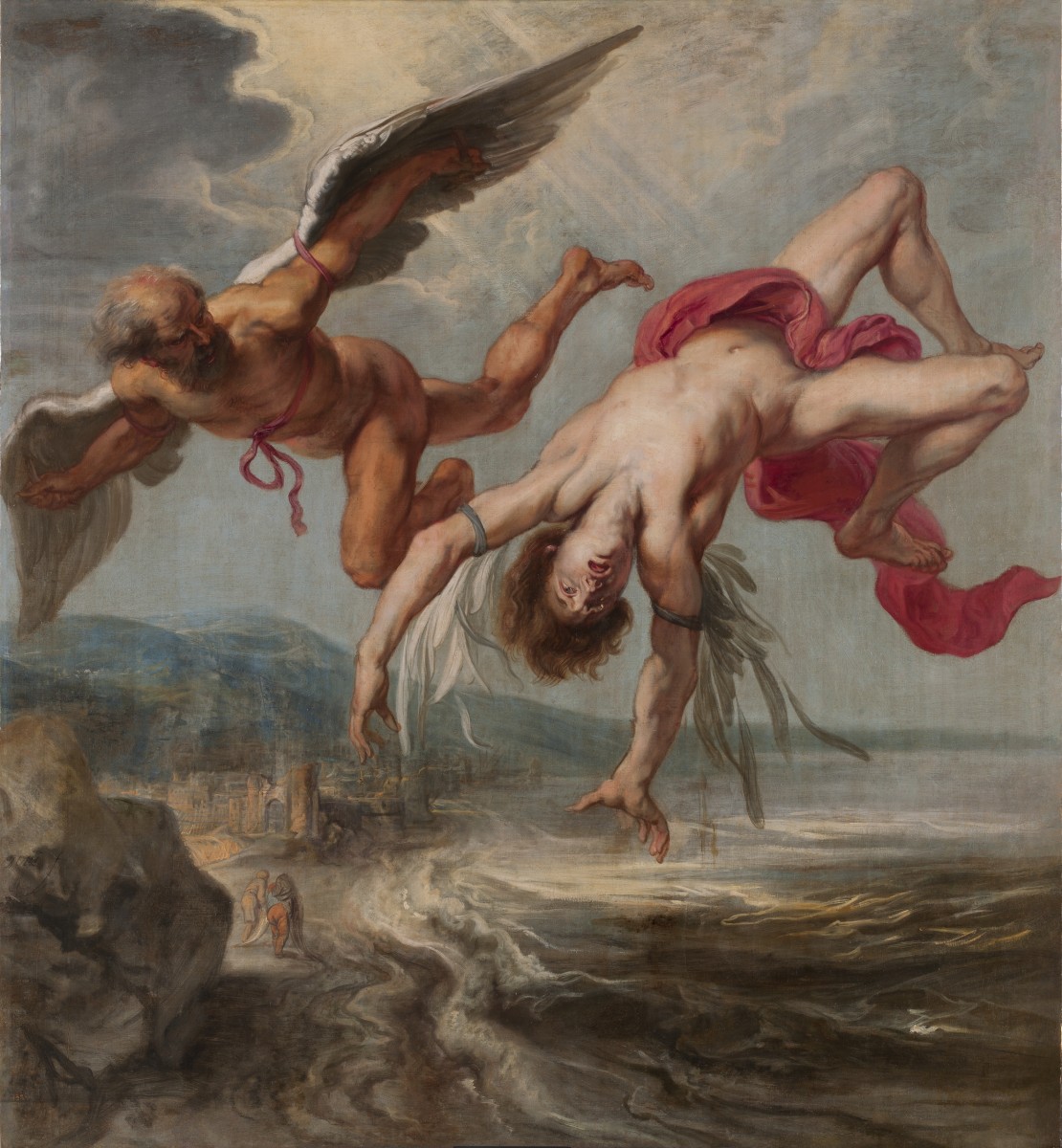
Graphic Novelist Alison BechdelAlison Bechdel carefully relates the events of the relationship between the narrator-protagonist, Alison, and Alison’s distant father in a fusion of text and image in her graphic novel/memoir, Fun Home. Alison’s father committed suicide, and Alison suspects it was due to his homosexuality and Alison’s coming out to her parents (Bechdel 86). Alison is acutely aware of this because of her homosexuality. Alison sees her father as Icarus, who plummeted because he flew too close to the sun in an extended metaphor of homosexuality but, in a novel twist, believes that it is because of his crisis with his sexual identity that he guided her through her struggle with her sexual orientation.
Graphic Novelist Scott McCloudScott McCloud avidly draws cartoons, and in his work, Understanding Comics, he lays out the law of the land of graphic novels. McCloud explains that there are six types of transitions in a graphic novel that have different levels of closure. He also provides bar graphs that reveal that moment-to-moment transitions, those with the most closure, and non-sequitur transitions, those with the least closure, appear the least in renowned comics. Bechdel however uses moment-to-moment and non-sequitur transitions to present the distance in the relationship between Alison and her father, but the need Alison felt for her father’s guidance through her homosexuality.
McCloud defines a moment-to-moment transition as one that requires “very little closure” in the sense that little-to-no assumptions must be made on the part of the reader to connect the panels (McCloud 70). McCloud’s example shows a two frame representation of a woman blinking. In Fun Home, Bechdel uses moment-to-moment transitions once to recount the uncomfortable interaction between Alison and her father in the car on the way to a movie (Bechdel 220-221). Alison’s father recounts his homosexual activities to her. Alison’s father awkwardly covers parts of his face with his hand, while Alison’s eyes widen and dart around the scene as the conversation progresses into the extremes of discomfort. These moment-to-moment panels portray the relationship between Alison and her father at its most intimate, and still the two barely manage to communicate. Their personal relationship is distant at best before her father’s suicide, but Alison gets more out of their relationship after her father has passed away.
Bechdel uses non-sequitur transitions to infer the posthumous attachment Alison feels towards her father. McCloud states that a non-sequitur panel “offers no logical relationship between panels” (McCloud 72). It requires text to connect non-sequitur frames into a coherent statement. This is the case for the final page of Fun Home, since one panel is a close-up of the truck in front of which Alison’s father allegedly stepped to kill himself and the other panel is of a young Alison jumping off a diving board into her father’s arms (Bechdel 232). To begin to inspect these two panels, one must recall that at the beginning of the graphic novel, Alison alludes to her father’s analogous relationship to Icarus of Greek mythology who made wings with his father, Daedalus, to escape imprisonment (3-4). Icarus flew too close to the sun, despite Daedalus’ warnings to avoid the sun, and Icarus fell back down to the ground. In the final panels, Alison again compares her father to Icarus, accepting that her father flew too close to his sun, his homosexuality, that he committed suicide, or so she is convinced. Here, Bechdel adds a twist to the tale of Icarus, in that Alison believes her father fell so that he could “catch me when I leapt” (232). Alison feels that her father’s story as a homosexual supported her through her own struggle with her sexual identity.
Bechdel’s use of moment-to-moment and non-sequitur transitions to portray these concepts in Fun Home appears to have no significance at first glance, but McCloud alludes to how rare these types of transitions are in Understanding Comics. He gives graphs to show how often the different types of transitions were used in popular comics. Some of the graphs report a minuscule use of moment-to-moment transitions, although most show no use at all, and no graph shows use of non-sequiturs (McCloud 75-80). Bechdel does not follow this trend as she uses the rarest transitions to show the dichotomy between the distant relationship Alison and her father share while he is alive, and the intimate ingratiation Alison feels for him after he dies. Bechdel conveys this information in rare transitions to allow no space for interpretation and to make the critical reader pay closer attention to the ideas presented in unorthodox ways; Bechdel uses them to keep others from needing an Icarus to catch them when they fall.
The Flight of Icarus- Jacob Peter Gowy, ca. 1635-1637On my Honor, I have neither given nor received unauthorized information regarding this work, I have followed and will continue to observe all regulations regarding it, and I am unaware of any violation of the Honor Code by others. -Nicholas L. Johnson
Works Cited:
Bechdel, Alison. “Fun Home.” Houghton Mifflin: New York, 2006. Print.
McCloud, Scott. “Undersanding Comics.” HarperCollins: New York, 1993. Print.
Gowy, Jacob Peter. “The Flight of Icarus.” Oil on Canvas. Museo del Prado, Madrid. ca. 1635-1637.
“Alison Bechdel.” the Barnes and Noble Review: April 27, 2012. Web. Sunday 20 September, 2015.
http://www.barnesandnoble.com/review/alison-bechdel-the-balancing-act.
“Cartoonist and Comics Theorist Scott McCloud” Wikipedia: last modified 5 August, 2015.
Accessed Sunday 20 September, 2015. https://en.wikipedia.org/wiki/Comics_studies.